
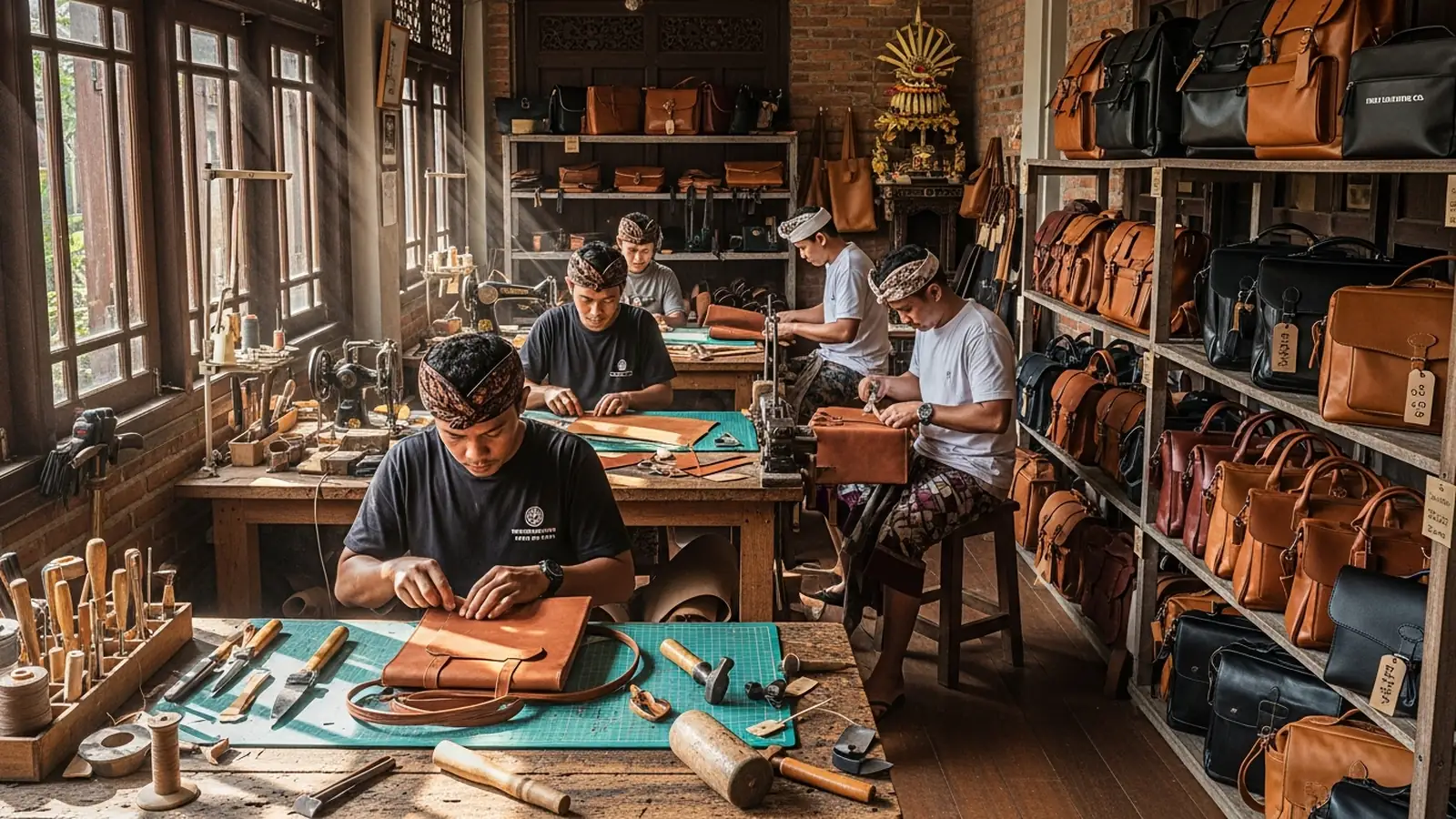
 Ubud · Gianyar · Bali
Bali Leather Bag: Quality Craftsmanship from Bali
Discover our range of premium leather bags handcrafted in Bali. Perfect for international wholesalers and retailers looking for unique products with a story.
What are you sourcing?
Tell us what you need and we'll guide you to the right product and next step.
For serious buyers and investors, Bali’s leather bag industry offers a unique blend of craftsmanship and opportunity. The island is home to numerous small workshops and OEM factories that specialise in producing high-quality leather bags, ideal for export markets. Understanding the intricacies of setting up operations or sourcing products from Bali is crucial, given the Indonesian regulations and business environment.
Understanding Bali’s Leather Bag Production Landscape
Bali’s leather bag industry is predominantly driven by small workshops and medium-sized OEM factories located in areas like Denpasar, Kuta, and Canggu within the Badung regency. These producers offer a range of bespoke and small-batch manufacturing services, making them attractive to foreign buyers seeking unique products. The production costs in Bali are relatively low compared to Western markets, but buyers must navigate the complexities of Indonesian export and business regulations. The island’s leather bag producers are often discovered through social media, with popular tags such as #balileatherbag providing a gateway to the vibrant local market.
Export buyers frequently visit Bali to inspect workshops and discuss OEM or private-label manufacturing options. This hands-on approach ensures quality and fosters strong relationships with local producers. Local workshops often rely on imported tanned leather, primarily from Java, which can affect lead times and price stability. Despite these challenges, Bali remains a competitive and attractive location for leather bag production.
Navigating Indonesian Business Regulations
Establishing a leather bag export company in Bali requires understanding and complying with Indonesian business regulations. Foreign investors typically use a PT PMA (Penanaman Modal Asing) structure, allowing up to 100% foreign ownership under Indonesian law. Setting up a PT PMA involves a minimum investment plan of IDR 10 billion (approximately USD 650,000–800,000) and a minimum paid-up capital of IDR 2.5 billion (about USD 160,000–200,000). The setup process typically takes 2–3 weeks if handled by specialist consultants.
The legal process begins with obtaining a pre-investment visa, followed by PT PMA incorporation and Investor KITAS issuance. All companies, foreign-owned or local, must obtain business licenses through Indonesia’s Online Single Submission (OSS) system, managed by the BKPM. Engaging a local lawyer is strongly advised due to the complexity of Indonesian property and company regulations, which differ significantly from Western legal systems. For more detailed guidance, visit the guides section of our website.
Logistics and Export Considerations
Exporting leather bags from Bali involves understanding logistical routes and customs requirements. The main logistical export routes are via air freight from Ngurah Rai International Airport (DPS) and sea freight through Bali or nearby Java ports. The choice between air and sea freight depends on volume and cost considerations. Customs classification for leather bags uses HS codes in the range 4202, affecting import duties and documentation requirements in destination countries.
Exporters must register with the OSS system and comply with Indonesian National Standard (SNI) requirements where applicable. Understanding these requirements is crucial for smooth export operations. Peak tourist seasons in Bali, such as July-August and December-January, can impact local workshop capacity as producers prioritise high-margin retail customers. For a comprehensive understanding of the export process, consult the Ministry of Trade of Indonesia.
Investment and Operational Costs
Operating a leather bag export business in Bali involves several cost considerations. Typical service fees for setting up a PT PMA via specialist agencies are around USD 6,500, separate from statutory investment capital requirements. Office rental costs for small businesses range from USD 500–1,000 per month, depending on location and standard. Indonesian corporate income tax is commonly cited around 20%, applicable to profits of PT PMA and local PT companies.
Foreign businesses must comply with Indonesian property regulations for commercial property purchase and long-term leases, often requiring legal structuring such as Hak Pakai or corporate holding structures. Engaging a local lawyer is recommended to navigate these complex legal landscapes. For further assistance, consider consulting firms like Citra Consultant Indonesia, which provide comprehensive services for foreign investors.
Quality and Production Capabilities
Bali’s leather bag producers are known for their high-quality craftsmanship and ability to offer bespoke and small-batch manufacturing options. Workshops frequently handle low-volume custom production, priced per piece with small minimum order quantities (MOQs). In contrast, export-oriented OEM factories typically require higher MOQs to offer competitive unit prices.
Buyers are encouraged to visit Bali to inspect workshops firsthand, ensuring product quality and establishing direct communication with manufacturers. This approach facilitates better negotiation and customisation of orders. Bali’s producers often utilise imported leather, primarily from Java, which can influence production timelines and pricing. For more information on our production capabilities, visit our about page.
Visa and Work Permit Requirements
Foreigners intending to work in Bali, including those running a leather export operation, must obtain the appropriate work or investor visa. A tourist visa is not sufficient for legal work in Indonesia. The Investor KITAS, linked to a registered company, is necessary for directors wishing to reside in Bali. Other shareholders not residing in Indonesia are not required to hold KITAS.
A business visit visa, valid for up to 60 days, is often used for initial research and preparation before formal company setup. The process of acquiring these visas involves specific steps, and engaging a local consultancy can streamline the procedure. For more detailed information on visa requirements, consult the Directorate General of Immigration, Indonesia.
Engaging Local Expertise
Given the complexities of Indonesian regulations and business practices, engaging local expertise is invaluable. Specialist consulting firms in Bali provide assistance with company formation, visa applications, and related documentation, ensuring compliance with local laws. These firms offer tailored solutions to help foreign investors navigate the intricacies of the Bali market.
Local consultants can also assist with understanding sector-specific licenses and Indonesian National Standards (SNI) requirements for leather goods exporters. Their expertise can help streamline operations and mitigate potential legal and regulatory challenges. For more information on engaging local expertise, consider reaching out to our contact page.
Ready to explore the opportunities in Bali’s leather bag industry? Reach out to us through our contact page for tailored advice and assistance in setting up your export operations in Bali. Our team is here to help you navigate the complexities and maximise the potential of this vibrant market.